When reviewing the financial performance of your service, it is important to understand how invoices and payments are generated and recorded within the system.
Many services have invoicing configured to run on a weekly or fortnightly cycle, with invoices covering a specific care period (for example, Monday to Sunday).
As a result, invoice dates may not align exactly with calendar months.
If you run a financial report using only the first and last day of a month, the results may not provide an accurate reflection of the income and charges relating to that month.
This is because:
Invoices generated within the reporting period may include care provided outside of the month.
Care provided within the month may be included on invoices generated before or after the reporting period.
Payments may be received earlier or later than expected.
Payments may be adjusted, deleted, re-entered, or allocated to different dates.
For the most accurate reporting, consider the invoicing cycle used by your service and ensure the reporting period captures the relevant invoices and payments associated with the care dates you are reviewing.
When comparing invoices and payments, minor variances can occur due to payment timing, adjustments, credits, refunds, or outstanding balances. Reviewing both the reporting period and the underlying transaction dates will provide the clearest picture of your service's financial position.
For example - the 1st of May is on a Friday.
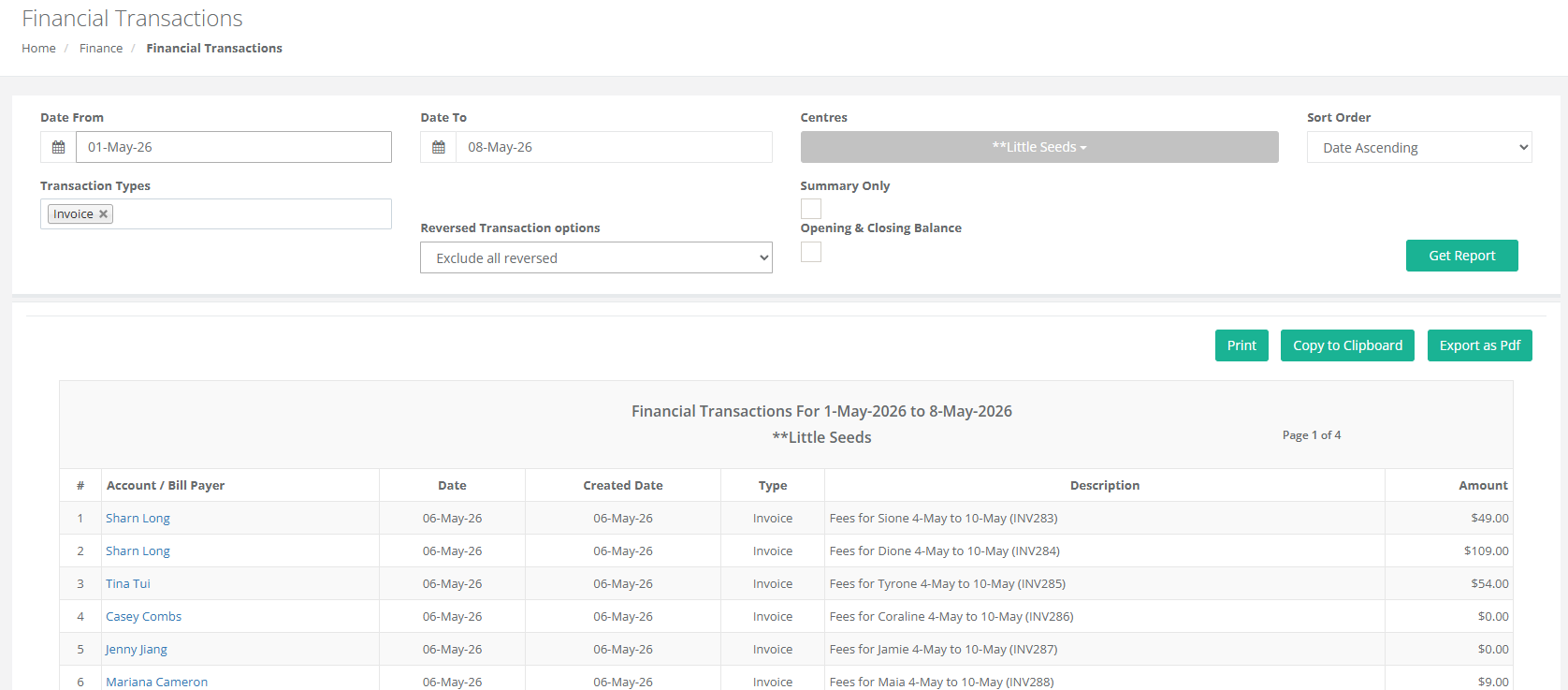
- Go to Reports
- Select Finance Reports
- Financial Transactions
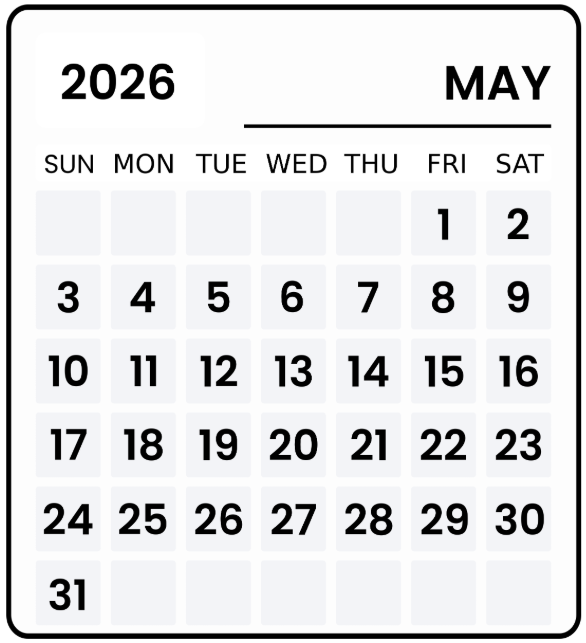
The Report you have run will not include the Invoiced date of the 1st of March as this is included on the Invoice dated the 27th of April.
When Running Financial Reports - it is best practice to go by actual weeks rather than dates.
You may find that your Invoices vs Payments will never 100% match as parents will not always pay exactly on time, or in cycle. They might pay early, late, in advance, in arrears.
Was this article helpful?
That’s Great!
Thank you for your feedback
Sorry! We couldn't be helpful
Thank you for your feedback
Feedback sent
We appreciate your effort and will try to fix the article